
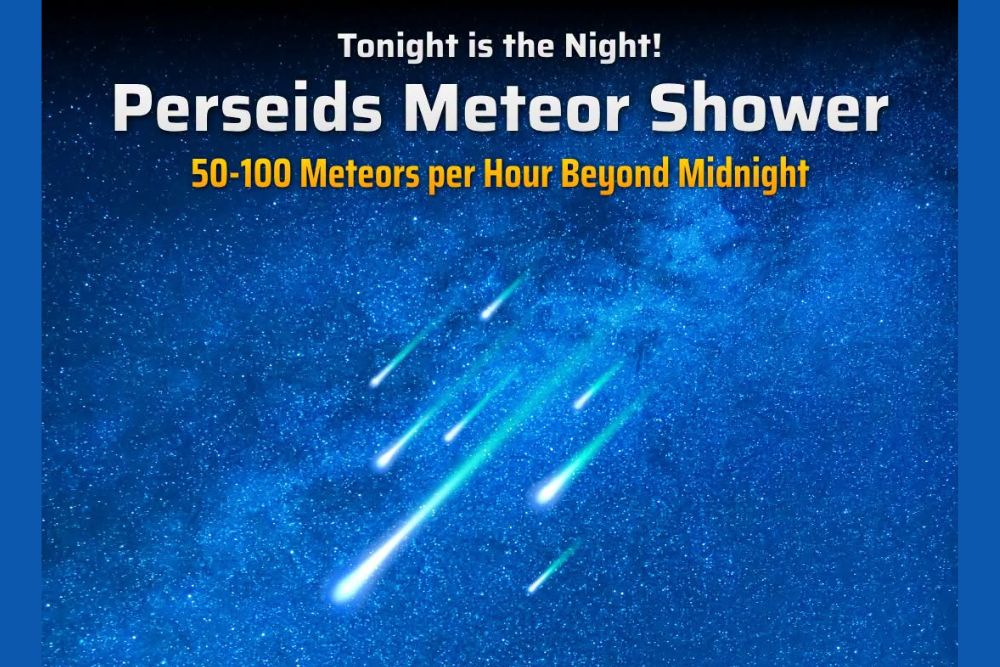
MICHIGAN — Tonight marks the peak of the Perseid Meteor Shower, the largest meteor shower of the year, with residents encouraged to head outside if clear skies allow. While some areas will see 50 to 100 meteors per hour under complete darkness, many observers typically report closer to 10 to 25 per hour depending on local conditions and light pollution.
Peak Viewing Occurs Past Midnight Into Wednesday Morning
The Perseid Shower peaks overnight into August 13, with the best viewing window falling past midnight when peak darkness is ongoing. Simply looking up during this window offers the best chance to spot meteors streaking across the Michigan night sky.
This overnight timing means residents willing to stay up late or wake in the early morning hours will have the greatest opportunity to witness the shower at its most active, provided cloud cover cooperates across the state.
Meteors May Display Different Colors Based on Composition
Observers watching the Perseids may notice meteors shining in different colors, a phenomenon caused by the varying compounds that make up each individual meteor as it burns up entering the atmosphere. This adds a visual variety to the display beyond the typical streak of white light.
This color variation is one of the distinguishing features that makes the Perseids a particularly popular shower to observe each August, offering more visual interest than some other annual meteor events.
Clear Skies Remain Key Factor for Successful Viewing Statewide
The ability to actually witness tonight’s peak activity across Michigan depends heavily on cloud cover, with the shower’s visibility varying significantly from one part of the state to another based on local sky conditions overnight.
Residents in areas with clearer skies and less light pollution stand the best chance of approaching the higher end of the 50 to 100 meteors per hour range, while those in more urban or cloud-affected areas may see considerably fewer.
Rate Estimates Vary Widely Depending on Local Conditions
While peak theoretical rates can reach 50 to 100 meteors per hour under ideal complete darkness, many observers report seeing closer to 10 to 25 meteors per hour in practice, reflecting the impact of light pollution, partial cloud cover, and varying eye adaptation among viewers.
Residents across Michigan hoping to catch the display are encouraged to find a dark viewing location away from city lights and allow their eyes time to adjust for the best chance at spotting the Perseids during tonight’s overnight peak.

Leave a Reply